
HS vs. Acne: What Hidradenitis Suppurativa Is and How to Care for HS-Prone Skin

Lately, my DMs have been filled with the same question, asked a dozen different ways: "Do you treat HS?" Some of you have been dealing with painful bumps under your arms or along your bikini line for years, and many of you were told it was acne, ingrown hairs, or a hygiene issue (it isn't). So I wanted to give this topic the full conversation it deserves.
If you're new here, hey! I'm Morgan Cameron, holistic esthetician and founder of Enlightened Beauty in Sacramento. I opened shop in 2016, and I've spent the last decade working with acne and inflammatory skin, especially cases that haven't responded to the usual approach. A lot of people actually live with HS, and it's something I rarely see being talked about publicly.
In simple terms, HS (hidradenitis suppurativa) is a chronic inflammatory skin condition that starts in the hair follicle and causes deep, painful bumps in places where skin rubs together. It can look a lot like acne, but it behaves differently and needs its own kind of care.
Keep reading, because I'm walking you through what HS actually is, how to tell it apart from acne, what I will and won't do in the treatment room, and how to support HS-prone skin at home.
What Is HS (Hidradenitis Suppurativa)?
First things first, it's pronounced hi-drad-uh-NYE-tis sup-yur-uh-TYE-vuh (I know, it's a mouthful). You might also see it called "acne inversa," which is a big part of the reason it gets mistaken for acne so often.
HS tends to show up where skin touches or rubs together (the same areas that are prone to chafing), including the:
Armpits
Groin and bikini line
Inner thighs
Buttocks
Under the breasts
Less often, it can pop up behind the ears, at the nape of the neck, on the scalp, or around the navel. Friction from chafing or tight clothing doesn't cause HS, but it can make flare-ups more uncomfortable and harder to calm down.
It usually starts as a deep, tender bump that can feel like a boil. Over time, those bumps tend to come back in the same spots, open and drain, and leave behind scarring or small tunnels under the skin (called sinus tracts).
I want to be really clear about one thing, because so many of you have been made to feel otherwise: HS is not contagious, and it isn't caused by poor hygiene. You didn't get it from not washing enough, and you definitely can't scrub it away (scrubbing actually tends to make it worse).
HS vs. Acne: How to Tell the Difference
Since HS starts in the hair follicle, I totally get how it ends up mistaken for a breakout, an ingrown hair, or folliculitis for years. These are the patterns I pay attention to.
Where it shows up
Acne usually appears on the face, chest, and back, where oil glands are most active. HS favors the skin folds and friction-prone areas I mentioned above.
How it feels
Acne can definitely be tender (especially deeper cysts), but most breakouts sit closer to the surface. HS bumps tend to be deep, firm, and painful, more boil than pimple.
How it behaves over time
Breakouts, ingrown hairs, and folliculitis usually come and go. HS has a habit of returning to the exact same spots, over and over again.
What happens as it progresses
HS bumps can open and drain, connect through sinus tracts under the skin, and leave behind thick, rope-like scarring. Acne scarring tends to look different, usually pitted or textured.
How it responds to acne care
If you've been throwing acne products at the same painful bumps for months (sometimes years) and they keep coming back, that pattern alone tells me a lot.
It's also possible to have both. Severe acne is actually one of the conditions associated with HS, so someone can be dealing with breakouts on their face and HS in their skin folds at the same time.
What's Happening Under the Skin
Here's what's actually going on. HS begins when a hair follicle gets blocked. Pressure builds until the follicle ruptures below the surface, and the body responds with a wave of inflammation. When that cycle keeps repeating, nearby follicles get pulled in too, which is how the deeper bumps, drainage, and tunnels develop over time.
As for why that blockage happens in the first place, researchers still don't have one clear answer, but they believe a few factors work together. Genetics play a real role (about one-third of people with HS have a relative who has it too), and hormones seem to be involved as well. HS usually shows up after puberty and before 40, and it affects roughly three women for every man.
At its core, HS is an inflammatory condition, which is why it's associated with other inflammatory and metabolic conditions like inflammatory bowel disease, arthritis, and diabetes. This part clicks for me as a holistic esthetician, because I'm always looking at inflammation as a whole-body conversation.
You'll often see smoking and extra weight mentioned alongside HS. They're considered risk factors, meaning they're linked to developing it and to more severe flares, yet thin nonsmokers can still develop severe HS. So please don't let anyone make you feel like this is your fault.
Why So Many People Go Years Without Answers
Honestly, HS is way more common than most people think. A 2025 study in JAMA Dermatology found that roughly 1 in 100 people worldwide live with it, and the FDA estimates it affects anywhere from 1% to 4% of people in the U.S. There's a good chance someone you know is dealing with it right now (maybe even you).
What really gets me is how long people go without a name for it. One international study found it took an average of 7.2 years to get an HS diagnosis, compared with 1.6 years for psoriasis. That's over seven years of switching products, changing soaps, and wondering why nothing seems to work.
So when I think about why my DMs have been flooded with HS questions, it makes total sense to me. If you've spent that long looking for answers and you see someone working with stubborn, inflamed skin every day, of course you're going to reach out. I don't take that lightly, and it's exactly why I want to be honest with you about where an esthetician fits in.
What I Do (and Don't Do) With HS-Prone Skin
HS is a medical condition, and many people manage it alongside a medical provider. My role is a supportive one, and I think it's an important one. I can help keep your skin calm, comfortable, and cared for, and I can make sure nothing we do in the treatment room makes things worse.
What I won't do over active HS
Even when a bump looks like it's ready to be extracted, HS inflammation runs much deeper than what you can see on the surface. So over active or draining areas, I skip:
Extractions or trying to drain a bump
Waxing
Scrubs or any abrasive exfoliation
Dermaplaning or shaving directly over bumps
Microneedling
Strong chemical peels
What we can do together
Here at the studio in Sacramento, my team and I work around active areas and focus on calming inflammation and supporting your skin barrier with gentle, non-stripping products. We'll also talk through the everyday things that can make a difference, like cutting down on friction, choosing gentler products for sensitive areas, and the internal pieces we always look at with inflammatory skin (stress, sleep, hydration, and gut health). You don't need to have any of that figured out before you come in, because that's exactly what we work through together.
I'll never promise that a facial, a peel, or a supplement will clear HS, and I'd be wary of anyone who does. For me, the goal is calmer skin, more comfort, and a routine you can actually stick with.
How to Care for HS-Prone Skin at Home
What you do between appointments matters just as much as what happens in the treatment room. A few everyday habits can go a long way toward keeping flare-ups calmer:
Hands off. Squeezing or picking at bumps can push inflammation deeper and irritate the skin around them.
Skip the scrubs. Gentle cleansing is the goal, so save the loofah and grainy exfoliants for somewhere else.
Avoid waxing affected areas. If you shave, go slow with a fresh blade and a shaving gel, and take extra care around active bumps.
Choose looser, breathable clothing when you can, especially if tight waistbands or leggings tend to set things off.
Stay cool. Heat and sweat can make flares more uncomfortable, so change out of sweaty clothes as soon as you can.
Check your deodorant. Formulas with alcohol, baking soda, dyes, or fragrance can irritate sensitive underarms.
Try a warm compress for about 10 minutes when a bump is feeling tender.
The HS-Prone Skin Starter Kit
Since so many of you have asked what to actually use, I put together a starter kit with the products I reach for most with HS-prone skin. It's a simple, gentle routine that keeps your skin calm, hydrated, and protected, with nothing harsh or stripping.
Ourself Daily Purifying Cleanser
I love starting here because it gets your skin clean without any scrubbing. It's fragrance-free, sulfate-free, and has niacinamide in it, so it's gentle enough to use every day. Just use your hands in the shower, rinse, and pat (don't rub) dry.
This one is one of my go-tos for inflamed, reactive skin. It helps calm the look of redness and supports a healthy, balanced barrier, which is exactly what HS-prone skin needs. Smooth a thin layer over clean, dry skin.
This is your daily barrier support. It's fragrance-free and packed with niacinamide, peptides, and vitamin E to lock in hydration and help your skin stay strong. Use it every day, right after your serum.
For everywhere else, this is the body lotion I recommend. It's made to boost hydration and strengthen the skin barrier, which helps high-friction areas stay soft and comfortable. I like applying it right after the shower, while your skin is still a little damp.
Lira Clinical PRO Brightening Masque
This is your once-a-week treat for the dark marks HS can leave behind. It uses vitamin C, peptides, and fruit enzymes to help brighten and smooth, and it's only meant for skin that's fully healed, so keep it away from anything active, open, or draining.
HS-prone skin can be extra sensitive, so I always recommend introducing one product at a time and patch testing first.
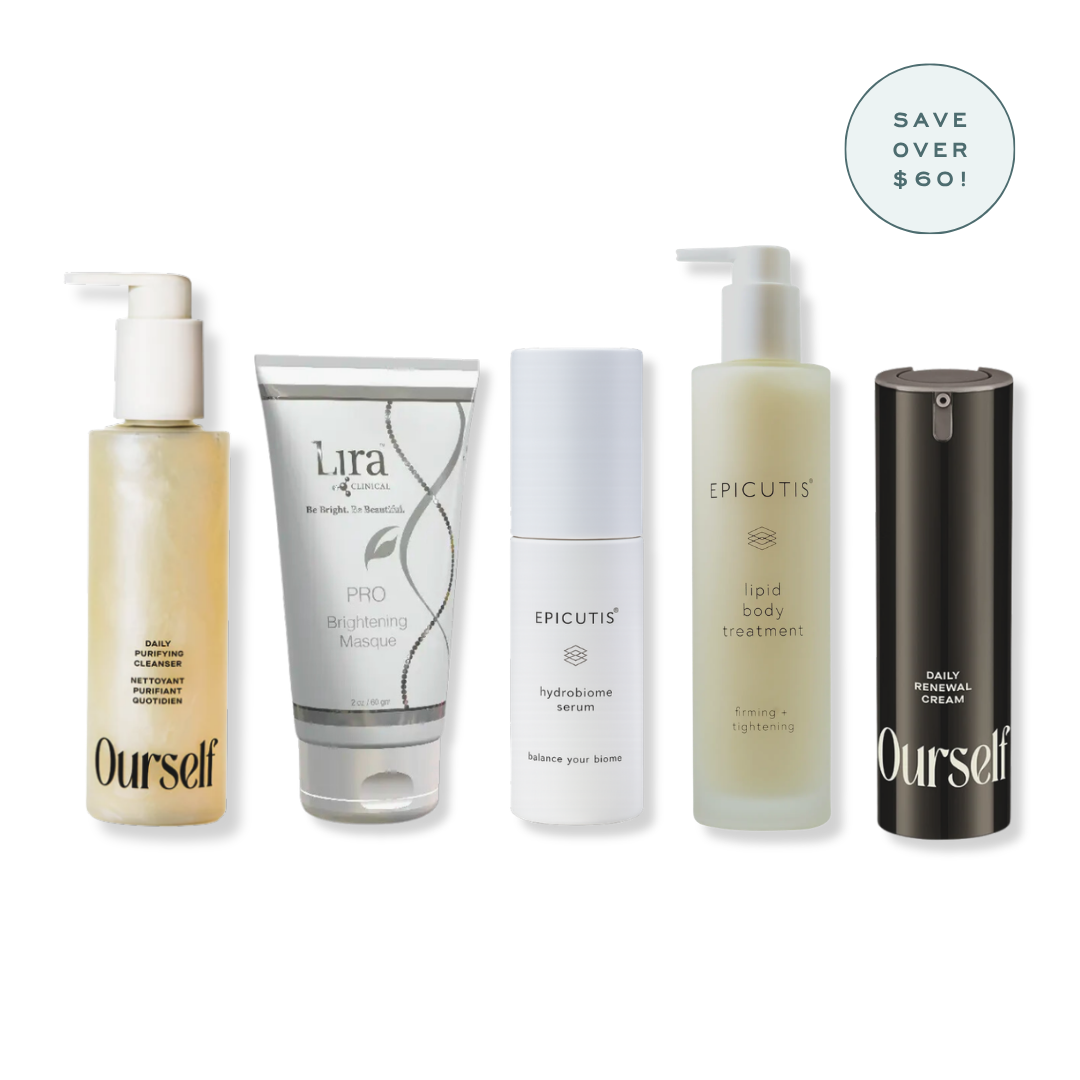
Shop The HS-Prone Skin Starter Kit
For Estheticians: Recognizing HS in Your Treatment Room
If you're an esthetician reading this, there's a good chance you've already had a client with HS on your treatment bed, even if neither of you had a name for it at the time.
A few things that make me slow down during a consultation:
Deep, painful bumps that keep returning to the same skin folds
Bumps that open and drain, or leave behind thick, rope-like scarring
A client who's "tried everything" for body breakouts in those areas and nothing has stuck
When I see that pattern, I shift my approach. I keep everything gentle and barrier-focused over those areas, and I talk with the client about what I'm noticing with a lot of compassion, because many of them have felt dismissed for a long time. As estheticians we don't diagnose, so I'm careful with how I phrase things, but simply acknowledging the pattern can be a huge relief for someone who's been searching for answers.
Assessment is everything in this work. Learning to recognize when skin isn't behaving like acne is one of the most valuable skills you can build, and it's a big part of how I teach estheticians to look at the skin in front of them.
Frequently Asked Questions About HS
Is HS a type of acne?
No. HS (hidradenitis suppurativa) is a chronic inflammatory skin condition that starts in the hair follicle. It's sometimes called "acne inversa" and can look like acne, but it shows up in skin folds, runs deeper, and tends to return to the same spots. Some people have both.
Is HS contagious?
No. HS isn't contagious, and it isn't caused by poor hygiene. You can't catch it from someone or pass it to anyone else.
Can an esthetician treat HS?
HS is a medical condition, so estheticians don't diagnose or treat it. What we can do is support HS-prone skin by working gently around active areas, focusing on barrier support, recommending non-irritating home care, and avoiding treatments that can make flares worse. That supportive care is exactly how my team and I approach HS-prone skin at Enlightened Beauty in Sacramento.
Does waxing make HS worse?
It can. Waxing irritates the skin and hair follicles, which can trigger more flares, so I avoid waxing HS-prone areas. If you shave, go slowly with a fresh blade and a shaving gel.
What skincare is good for HS-prone skin?
Gentle, fragrance-free products that clean without scrubbing and support the skin barrier. Skip harsh scrubs and stripping cleansers, and look for deodorants without alcohol, baking soda, dyes, or fragrance. Our HS-Prone Skin Starter Kit brings together the products I recommend most.
How common is HS?
More common than most people think. A 2025 JAMA Dermatology study estimated that about 1 in 100 people worldwide live with HS, and the FDA estimates it affects 1% to 4% of people in the U.S. It usually starts after puberty and affects roughly three women for every man.
Support for HS-Prone Skin in Sacramento
If you've been living with painful, recurring bumps and you're ready for some support, my team and I would love to help. Book an appointment at our Sacramento studio, and we'll build a gentle plan around your skin together. You can also grab the HS-Prone Skin Starter Kit to start caring for your skin at home today.
Keep Reading
The gentle, consistent habits that help reactive skin feel calm and strong again.
✧ ✧ ✧
How to tell an irritated barrier apart from a true breakout, and why it changes your routine.
✧ ✧ ✧
Our go-to approach for breakouts on the chest, back, and body.
stay radiant,
— Morgan
About the studio
Enlightened Beauty
A holistic skincare studio in Sacramento, California, founded in 2016 by esthetician Morgan Cameron. Morgan and her team specialize in acne and inflammatory skin, chemical peels, and holistic skin care that looks at the whole person, including stress, sleep, hydration, and gut health. Morgan is the author of The Enlightened Acne Method, a professional guide for estheticians, and registered National First Day of Peel Season (September 7) with the National Day Archives.
Meet the Team