
Internal vs. Topical Acne: How to Tell What’s Driving Your Client’s Breakouts

If you're new here, hi! I'm Morgan, a licensed esthetician and the founder of Enlightened Beauty, a holistic skincare studio in Sacramento, California. I specialize in acne, and over the years I've developed a clinical approach that goes beyond what most of us learned in school.
Estheticians, if you’ve ever followed the right protocol, used the right products, timed everything the way you were trained to, and still had a client come back with the same breakouts, you already know how frustrating that is. I used to replay those treatments in my head after the client left, trying to figure out what I missed.
What I eventually realized is that I wasn’t missing anything in the protocol. I was missing the right question.
I kept asking, “What should I put on this skin?” when I should have been asking, “Where is this actually coming from?”
A lot of acne education focuses on what to do once the breakout is already there. In practice, one of the most important things you can learn is how to tell whether acne is being driven by something happening on the surface of the skin or something happening underneath it. That one shift changed my entire practice.
Let’s look at it closer:
Topical acne is usually triggered by something happening on the outside, for example, product reactions, over-exfoliation, buildup, friction, or pore-clogging ingredients.
Internal acne is usually being driven by something happening beneath the surface, for instance, hormones, gut issues, chronic stress, inflammation, or nervous system dysregulation.
They can look similar in the treatment room, but they do not behave the same, and they do not respond to treatment the same way.
Why the Right Protocol Still Fails
When a client’s acne is not responding to treatment, most estheticians do what they were taught to do. They adjust the products, swap the cleanser, add a stronger active, increase exfoliation, and schedule another peel.
Sometimes that works…but when it doesn’t, it’s easy to assume the answer is more correction. This is where many acne professionals get stuck.
In school, we’re taught how to identify acne. We are also taught lesion types, grades, and standard protocols. What often does not get enough attention is how to distinguish what might actually be driving the breakout.
While we can’t diagnose, that level of thinking still matters, because a breakout caused by barrier disruption or pore-clogging products needs a very different strategy than one being fueled by hormones, stress, or internal inflammation.
Topical acne and internal acne can look almost identical in the chair. Similar areas, similar lesion types, similar levels of inflammation…but they cycle differently, respond differently, and resolve differently.
If you use a topical strategy on an internally driven breakout, you may calm the skin temporarily, but the source is still active underneath. The breakout improves for a bit, then comes right back.
When I started separating these two patterns in my mind, clients who had been stuck for months started making progress.
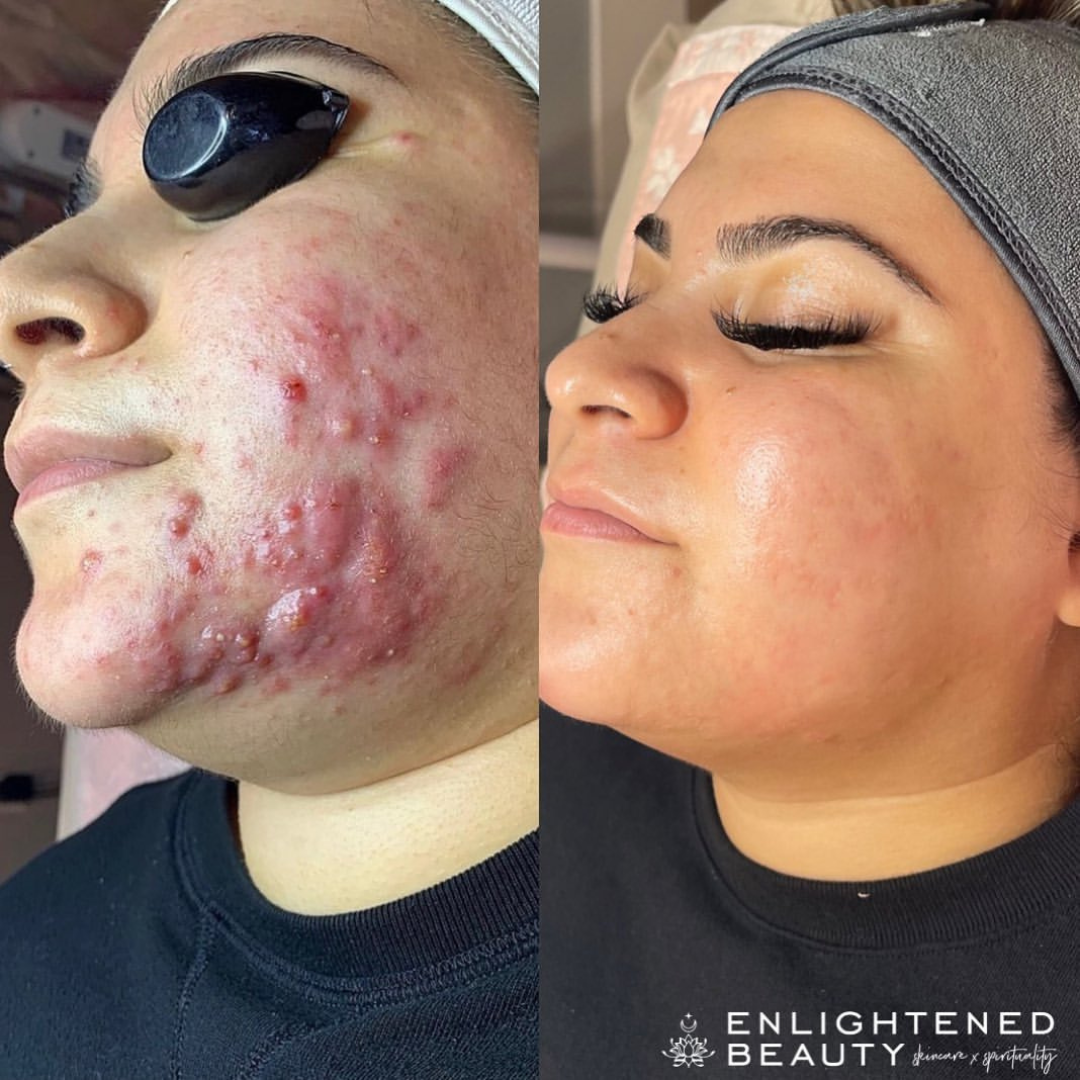
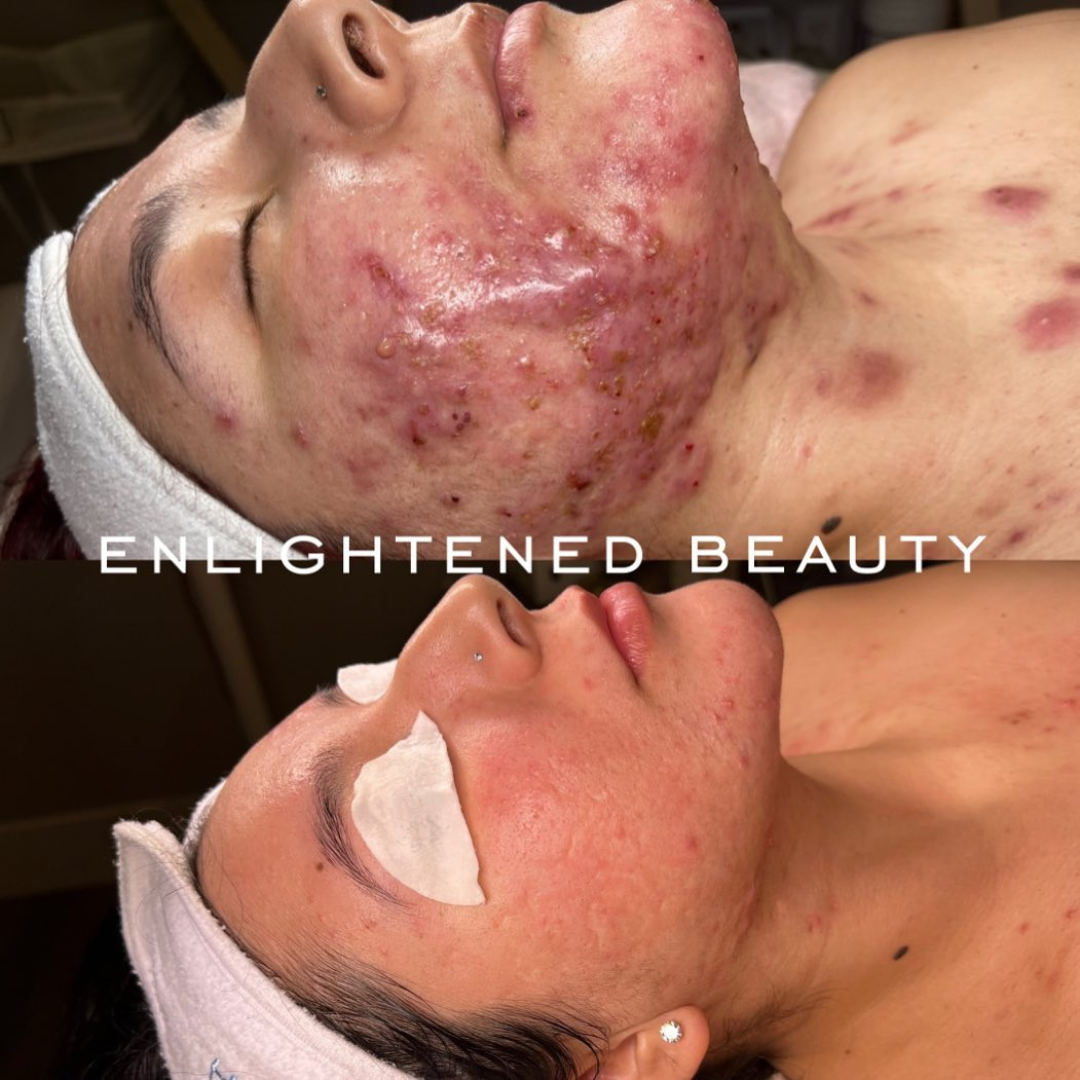
What Topical Acne Usually Looks Like
Topical acne is usually a response to something happening on the surface of the skin.
Common triggers include:
over-exfoliation
irritating actives
comedogenic ingredients
heavy occlusives that are not right for the skin
friction from hair, hats, phones, pillowcases, or workout gear
product buildup or poor product fit
Often, there is a traceable shift: a client started a new product, began using too many actives at once, got more aggressive with exfoliation, or started breaking out in areas where hair products, makeup, or skincare are landing most heavily.
Signs a breakout may be more topical:
breakouts started after a product or routine change
congestion is concentrated around the hairline, temples, forehead, or product-heavy areas
irritation and acne are showing up together
the skin improves when the routine is simplified
removing one trigger leads to visible improvement relatively quickly
This is the type of acne that often responds well to smart routine adjustments, barrier support, targeted exfoliation, and removing whatever is aggravating the skin.
When congestion clears after switching a product or simplifying a routine, trust that. The skin is giving you useful information.
What Internal Acne Usually Looks Like
Internal acne is where many estheticians start to feel less certain, especially early on. The skin may look acneic, but it doesn’t respond the way you expect it to.
You change the homecare, you support the barrier, you treat conservatively or clinically. The skin improves a little, then flares again. Or it keeps cycling no matter what products the client is using.
Signs a breakout may be more internally driven:
breakouts come and go in cycles
flares happen even when the routine stays consistent
inflammation clusters around the chin, jawline, cheeks, or lower face
stress, digestion, sleep, or hormonal shifts seem connected
the client has already tried multiple products or even prescriptions without lasting change
What makes internal acne so tricky is that the driver is underneath. The breakout keeps returning because the source has not been addressed. Such as:
Hormonal fluctuation
Gut imbalance
Chronic stress
Internal inflammation
Nervous system patterns
These all have the potential to show up on the skin. You can apply a perfectly appropriate topical protocol and still watch the skin stay stuck if the deeper driver is still active.
I think of it like mopping a floor while the sink is still overflowing. You can make things look better for a little, but until you deal with the source, you’ll be right back in the same cycle.
Why Consultation Matters More Than Ever
Consultations matter because you can’t always tell the difference just by looking at someone. Two clients can sit in your treatment room with very similar breakouts, and the root cause can be completely different. This is where the power of your consultation is and where root cause acne assessment begins.
The standard intake form is helpful, but the deeper questions are often what reveal the real picture. Over time, I’ve learned to ask questions that help me understand not just what the skin looks like, but what pattern it is following.
A few starting points I come back to in consultation:
What’s changed?
Is there a pattern?
What has the skin been exposed to?
What else may be contributing?
This invites your client to share a bit more vulnerably with you. Some clients will answer these questions in detail, others won’t. Both are okay.
What matters is that you are showing them you are not just treating what is visible, you’re paying attention to the bigger picture. That intention alone can change the dynamic of the appointment.
Over time, this kind of listening becomes second nature; I call it skintuition. It’s the ability to read patterns in the skin, ask better questions, and connect what you are seeing in the treatment room to what may be happening beneath the surface. You build it by staying curious, treating skin, connecting with your clients on a deeper than surface level, and trusting what you observe.
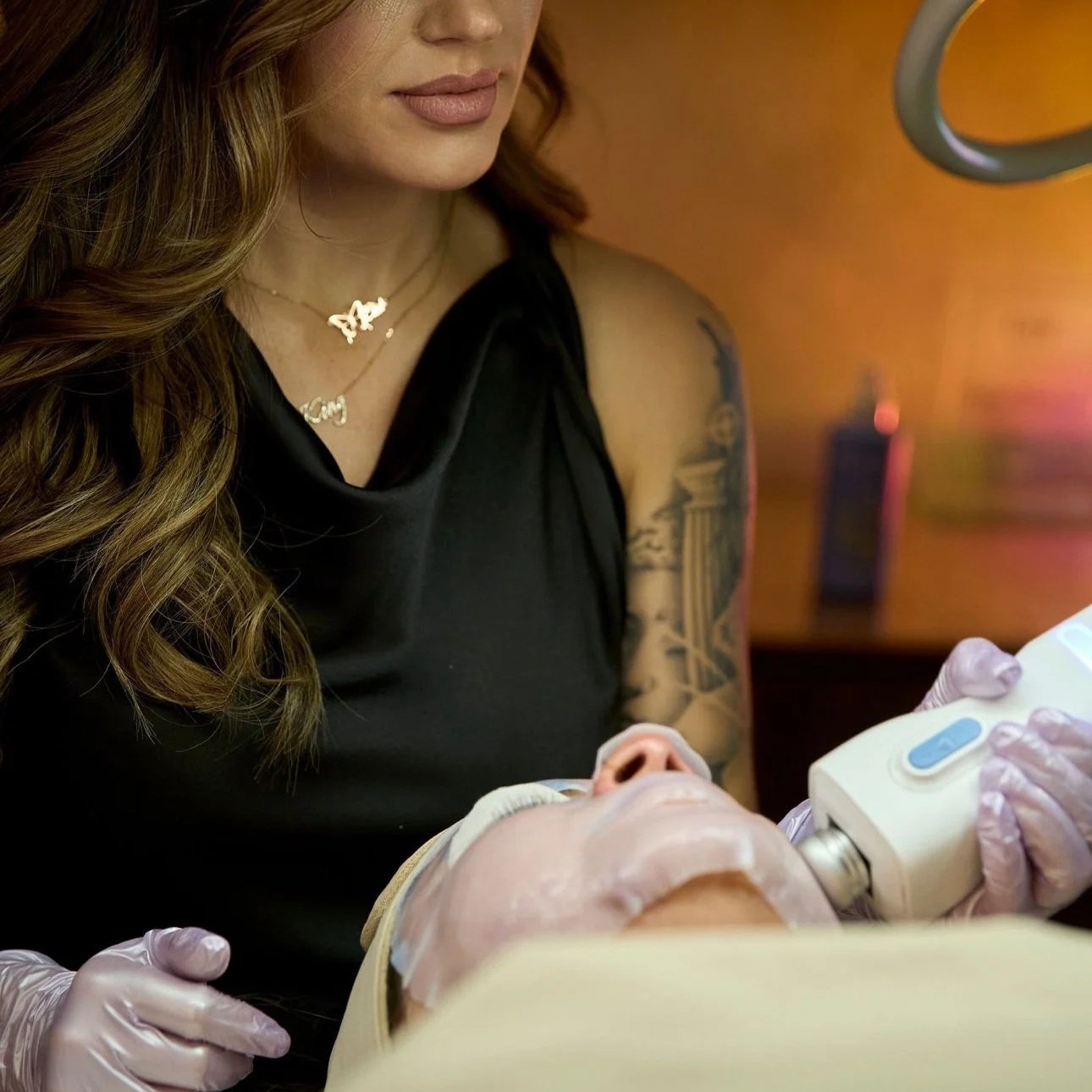
Once you understand what may be driving the breakout, your treatment decisions become much more intentional.
How This Changes the Way You Treat
When acne is topical, you can usually move into correction with more confidence. You identify the trigger, simplify what’s not working, support the barrier where needed, and use targeted treatments to help the skin clear.
When acne is internal, the approach needs more patience and more discernment. That does not have to mean you stop treating the client, it means you stop forcing correction onto skin that is asking for support first.
If the skin is inflamed, reactive, or sensitized, more actives will often make things worse. In those moments, I slow everything down. I focus on calming inflammation, supporting barrier repair, and reducing unnecessary stimulation. A compromised barrier can keep acne stuck in a loop. Pushing through it usually just extends the cycle.
This approach backs your results-driven work with true whole-person support. It also helps you have more honest conversations with clients. You can explain why their treatment plan may look different than they expected. You can help them understand why more aggressive is not always more effective. You can stop chasing symptoms, start supporting the client in a deeper way, and start building a plan around what is actually driving the skin.
The difference between protocols that manage acne and protocols that actually help resolve it often comes down to this: Are you treating what you see, or are you treating what is driving it?
A Quick Comparison: Internal vs. Topical Acne
Here’s a simple way to think about it:
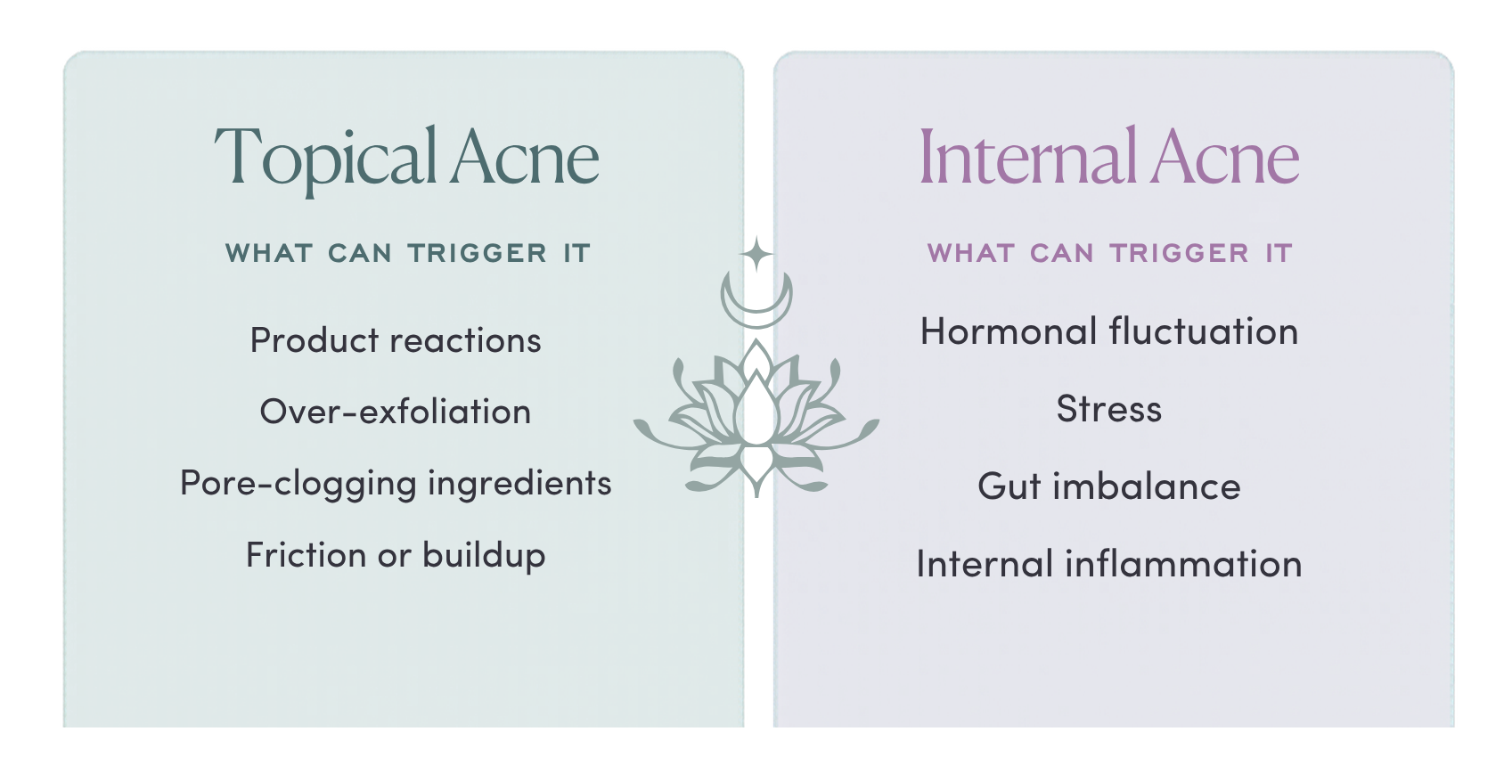
Of course, not every client fits neatly into one category. Some presentations are mixed, which is exactly why your assessment matters so much.
This Is One Piece of a Larger Methodology
I’ll scream this from the rooftops every day if it means that more estheticians can help their clients totally transform their skin: learning how to read the difference between internal and topical acne changed my practice dramatically.
It helped me stop treating every breakout the same way. It helped me ask better questions, create more individualized treatment plans, and understand why some clients were not responding even when the protocol looked right on paper.
Because the truth is, a lot of acne professionals are not struggling because they care less or know less. They’re struggling because they were never taught how to think about acne this way in the first place.
This way of thinking became part of a much bigger approach I developed over years of treating acne in the treatment room. One that blends clinical knowledge, holistic pattern recognition, barrier-first strategy, and deeper consultation.

That became The Enlightened Acne Method.
This methodology is for estheticians who are done guessing. Estheticians who want to understand why acne is happening, not just throw products at it. Estheticians who want to assess more clearly, treat more intentionally, and create real momentum with clients who have felt stuck for far too long.

The Enlightened Acne Method is a complete acne education system created by Morgan Cameron for estheticians who want to go beyond surface-level protocols. Think of it as part guide, part course, part continued mentorship, built from the same approach behind every transformation you see in this studio.
Your purchase includes:
✦ The Printed Guide: 120+ pages across four parts, mailed to you. Designed to live in your treatment room and be referenced as you grow your acne practice.
✦ The Enlightened Acne Hub: Your online learning center with video walkthroughs, protocols, product resources, and tools you can access anytime. This is where the method comes to life beyond the printed page.
✦ Continued education from Morgan: New resources are added to the Hub regularly, so your learning grows with the method.
If this way of thinking resonates with you, I’d love for you to be part of what I’m creating for estheticians who are ready to go beyond surface-level acne protocols and build a more intentional way of treating acne.
Quick reference: internal vs. topical acne in practice
Before your next acne client, run through this:
If the breakout traces back to a product change, over-exfoliation, or something on the surface: simplify the routine, remove the trigger, and move into targeted correction. The skin will usually respond quickly once the cause is gone.
If the breakout cycles regardless of products, follows hormonal or stress patterns, or hasn't responded to multiple protocol changes: slow down. Lead with barrier support and inflammation reduction before pushing actives. Have the deeper conversation about what's happening internally.
If you're not sure: start with your consultation questions. Ask about timing, cycling, lifestyle, and recent changes. Let the client's answers guide your assessment before you build the protocol.
One last question to sit with:
Think about your last few acne clients. For each one, could you identify whether you were treating something on the surface or something underneath? If the answer isn't clear, that's not a gap in your skill, that's the starting point for a completely different way of working.